

SIMPLIFYING HEALTHCARE COMPLIANCE
codify [cod-i-fy] verb 1. arrange (laws or rules) into a systematic code.
Who are we? It’s in our name. We take the complexities of the healthcare physical environment and organize them systematically to make them easier to manage.
We leverage years of healthcare facility engineering leadership across some of the nation’s largest hospital networks to deliver unparalleled, actionable consulting and training solutions that improve operations and compliance. Our educational approach offers straightforward solutions with an “owner’s perspective” that won’t break your budget.
In this spirit, we’d like to invite you to explore our services and consider allowing us to serve you.
About Us

Our Services
Explore our range of services designed to help you move forward with confidence, wherever you're headed next.
-
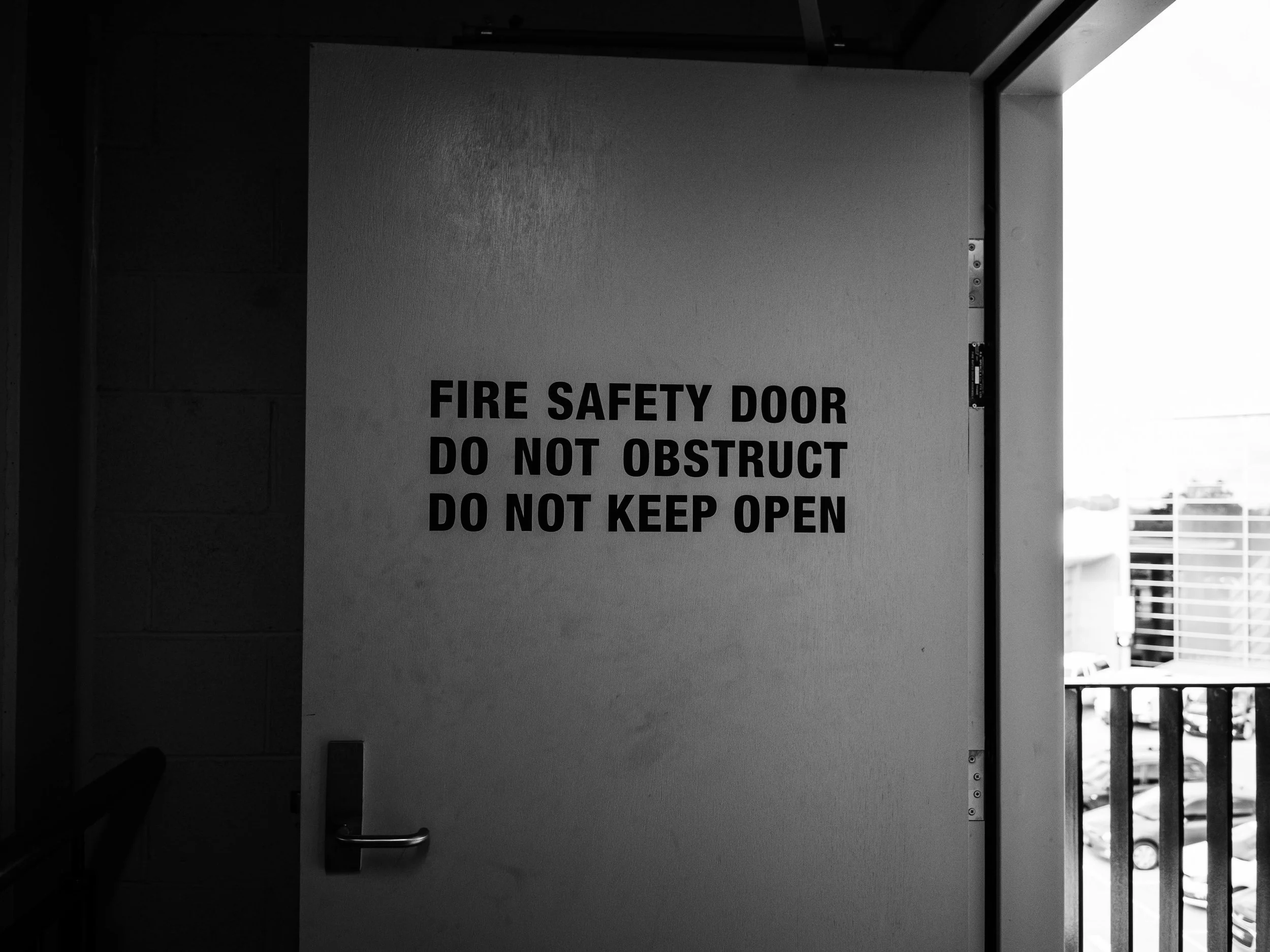
In July 2017, the Centers for Medicare & Medicaid Services (CMS) adopted the 2012 edition of the NFPA Life Safety Code, which includes requirements for maintaining, inspecting, and testing fire and smoke doors in healthcare facilities that receive Medicare/Medicaid reimbursement. CMS went on to say that non-rated door assemblies, including corridor doors and smoke barrier doors, are not subject to the annual inspection and testing requirements of either NFPA 80 or NFPA 105 but that these doors should be maintained as part of routine facility maintenance program (S&C 17-38-LSC). Our door inspections involve a comprehensive review of all of the aforementioned door assembly types, and the findings of the assessment are communicated to you digitally in the form of an exhaustive report accompanied by a copy of your existing life safety drawing with icons overlaid that demonstrate the location of each door and current pass/fail status.
-
The codes that govern doors relevant to life safety are numerous and complex. Repairing deficient doors within this population requires a skill set comparable to that of a commercial carpenter and a deep understanding of life safety code. This is never more evident than when we come behind vendors performing door installations and repairs and find that though the door may look fine, it either functions incorrectly or presents at least one non-compliant component that would inevitably fail a door inspection. In either case, an individual has the opportunity to leave the door in a compliant state, and most of the time, they fail to do so, presumably because they lack adequate knowledge of the life safety code. With this in mind, we are proud to say that all of our door repair technicians have a background in life safety code, which translates to this: not only will the door repair look good and function correctly, you can bet it will be code compliant too.
-
Life safety assessments are critical to achieving compliance and preparedness for accreditation surveys. Our life safety experts will conduct a comprehensive evaluation of your facility, meticulously examining areas above-the-ceiling, integrity and ratings of door and wall assemblies, egress paths, etc., as well as evaluating critical safety elements such as fire extinguishers, exit signs, fire/smoke dampers, illumination devices, and smoke detectors. Any findings or deficiencies noted during the assessment will be documented on your existing life safety drawing and include an exhaustive inspection report and pictures.
-
Life safety drawings are another cornerstone to achieving compliance and preparedness for accreditation surveys. A life safety drawing is a living document that, if left unattended, can lead to thousands of dollars being misspent by the facility to inspect or repair life safety features that are no longer relevant. Commission us to update your drawing, and one of our life safety experts will begin by performing a comprehensive review of the facility’s historical drawings and a meticulous on-site assessment of field conditions. At a minimum, the following life safety attributes shall be evaluated and documented on the updated drawing:
Construction type(s)
Occupancy type(s)
Square footages
Compartmentalization
Fire Walls
Smoke Barriers
Smoke Partitions
Suites
Hazardous Areas
Non-Sprinklered Areas
Room Designations
Means of Egress
Locking Arrangements
We'll then review your updated drawing with our licensed architects according to the regulatory requirements. As part of the deliverables, you can expect the updated life safety drawing in DWG/PDF format and an updated architectural background drawing in DWG format.
-
Sometimes you need a second set of eyes. Allow us to review your plans before finalization, and trust us to add value where there is opportunity. We won’t let you down.
-
Pre-occupancy inspections are some of the most valuable reviews we perform. Often times during new construction shortcuts are taken and the quality of work suffers. This is problematic given the myriad of codes and rigid standards that new construction must meet. We suggest that anyone and everyone in a position of pre-occupancy should have an inspection done so that the contractor might be held liable for the expenses necessary to reconcile any present deficiencies. If a pre-occupancy review is not performed, the facility will likely be footing the bill later, and it will not be cheap. Protect yourself and hire us today to ensure you get what you paid for.